16 Personality Types Test
This free 16 personality types test asks 60 short statements, 15 for each of four preference pairs: extraversion or introversion, sensing or intuition, thinking or feeling, and judging or perceiving. You rate how much each one sounds like you, and the test returns your four-letter type, how clearly you lean on every pair, and a link to a full profile of that type.
Free · no sign-up · answers never leave your device
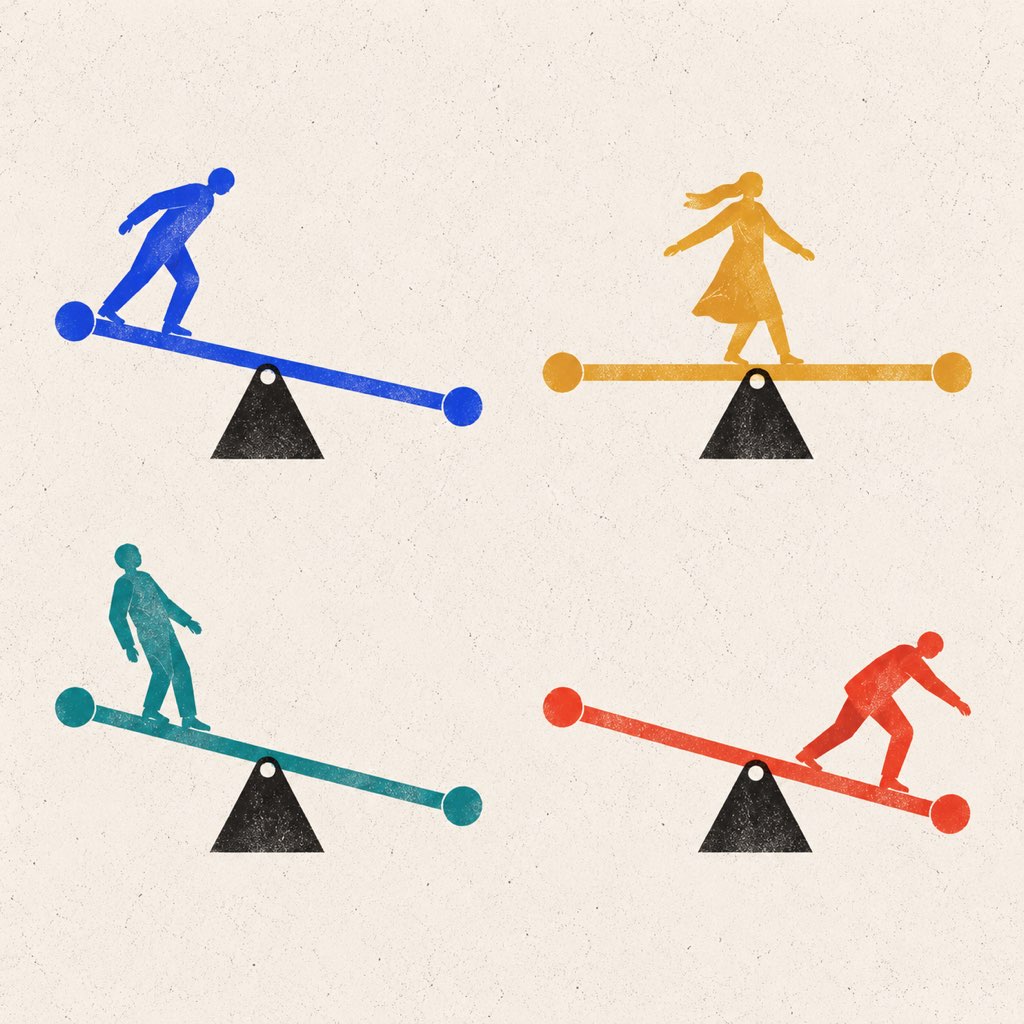
What the four letters mean
The first letter is about energy. Extraverts (E) tend to recharge through people, conversation and activity, while introverts (I) recharge through quiet time and think things through privately before sharing them. Neither is shyness or confidence; it is about what fills the tank and what drains it.
The second letter is about information. Sensing (S) favours concrete facts, direct experience and step-by-step detail. Intuition (N) favours patterns, meanings and what might be possible later. The third letter is about decisions: thinking (T) leans on impersonal logic and consistent rules, feeling (F) leans on personal values and the effect a choice has on people. The last letter is about lifestyle: judging (J) likes plans, closure and settled decisions, while perceiving (P) likes flexibility, open options and adapting as things unfold.
How the test is scored
Every statement belongs to exactly one of the four pairs. About half of them describe the first letter and the rest describe the second, so simply agreeing with everything does not push you toward one side. Your answers on a five-point scale, from strongly disagree to strongly agree, are added up within each pair and turned into a percentage.
If you score 68% toward introversion, the result shows I 68%; the remaining 32% is your extraversion side. A percentage close to 50 means you use both styles about equally and the letter could easily flip on another day. A percentage near 80 or 90 means a clear, consistent preference. The test runs entirely in your browser, and your result lives only in its link.
How to read your result
Start with the four letters, then look at the strength of each one. Two people with the same code can feel quite different if one is a strong introvert and the other sits at 52%. Treat any letter under about 60% as a both-and rather than an either-or, and read the profile of the neighbouring type as well.
Each type page on Traitprint goes deeper than the letters. It explains the function stack that typology writers associate with the type, typical strengths and blind spots, how the type tends to work and love, common misconceptions, and links to related Enneagram and Big Five tendencies. You can also take the cognitive functions test to check whether your stack points to the same four letters.
Accuracy and limits
Type models sort people into clean categories, but real preferences sit on a continuum, which is why this test shows percentages instead of just letters. Mood, context and how you see yourself all affect the answers, so retaking the test after a few weeks is a good habit. Researchers generally prefer trait models such as the Big Five for prediction, because they measure degrees rather than types.
Use your result as a vocabulary for noticing differences between people, not as a box or a verdict on what you can do. It is not a clinical or hiring assessment, and it cannot tell you which career or partner is right for you.
FAQ
Is this the official MBTI®?
No. This is an independent test with 60 statements written for Traitprint. Myers-Briggs Type Indicator® and MBTI® are trademarks of The Myers-Briggs Company; Traitprint is not affiliated with it. The official instrument is administered through certified practitioners. Our test uses the same broad four-letter idea, which comes from Jung's typology, with original wording and open scoring.
How long does the 16 personality types test take?
Most people finish in about six to eight minutes. There are 60 statements and no sign-up. Answer with your first honest reaction rather than the person you would like to be, and use the middle option only when a statement really fits you half the time.
Why did I get a different type from another test?
Different tests use different statements and scoring rules, and any letter close to 50% can flip between attempts. Look at your percentages: the letters with strong scores usually stay stable, while the borderline ones are the likely source of the difference. Reading both type profiles often makes the better fit obvious.
Which type is the rarest or the best?
No type is better than another; each comes with its own strengths and trade-offs. How common a type is depends on who takes the test and how it is scored, so we do not publish population figures. Focus on how well the description fits you rather than how rare it is.
Can my type change over time?
Strong preferences tend to be fairly stable in adults, but borderline letters can move with life stage, job and mood. Many people also grow more comfortable using their less preferred side with age. If one letter keeps changing, you probably use both styles comfortably.
Is my data stored anywhere?
No. Your answers are scored in your own browser and never sent to a server. The result is encoded in the link, so it exists only if you save or share that link. Analytics only record that a test was started or finished, never your answers.
For self-reflection and entertainment only — not a clinical or diagnostic assessment. An independent test, not affiliated with The Myers-Briggs Company.
Enneagram Test
Find your Enneagram type and wing out of nine core motivations.
90 questions · ~9 min · free
PersonalityBig Five Personality Test
Openness, conscientiousness, extraversion, agreeableness and neuroticism — the model psychologists use.
50 questions · ~6 min · free
RelationshipsLove Language Test
Which of the five love languages fills your cup — and how it compares with your partner's.
30 questions · ~5 min · free