ENFP Personality Type: Traits, Function Stack, Love & Careers
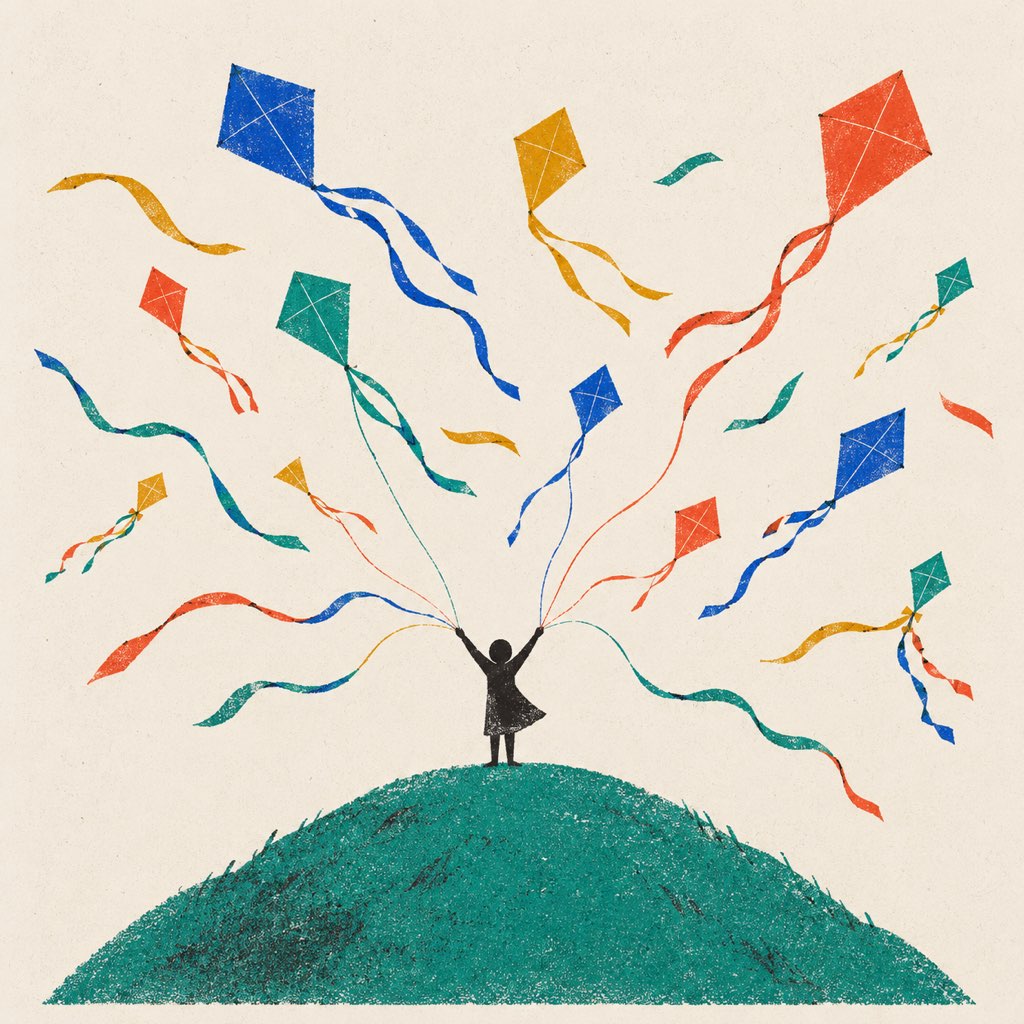
ENFP is one of the 16 four-letter types in Jungian-inspired typology, combining Extraversion, Intuition, Feeling and Perceiving. ENFPs tend to be curious, expressive and quick to spot possibilities in people and ideas, while steering by a strong set of personal values. The type describes leanings in attention and decision-making, not a fixed script for anyone's life.
What the letters in ENFP mean
Extraversion means an ENFP usually draws energy from contact with the outside world: people, places, new conversations. Intuition shows a preference for patterns, meanings and future possibilities, so an ENFP may jump from one idea to a dozen related ones in a single breath.
Feeling points to decisions shaped by values and by how choices affect people. Perceiving reflects comfort with spontaneity and a dislike of closing doors too early. Each letter is a lean rather than a label; an ENFP can still plan carefully or enjoy solitude. Myers-Briggs Type Indicator® and MBTI® are trademarks of The Myers-Briggs Company; Traitprint is not affiliated.
The ENFP function stack: Ne, Fi, Te, Si
The dominant function is extraverted intuition (Ne), which scans the world for connections and what-ifs. It fuels brainstorming, humor and the ability to see potential in someone others overlook. The auxiliary is introverted feeling (Fi), a private compass that decides which of those possibilities is actually worth pursuing.
The tertiary function, extraverted thinking (Te), helps ENFPs organize and get results when a goal truly matters to them. The inferior is introverted sensing (Si), the steady, detail-and-routine side that can feel dull, and under stress may flip into worry about health or past mistakes. The stack framework is a later theory built on Jung's original functions and is best used as a lens, not proof.
ENFP strengths and blind spots
ENFPs often light up a room with enthusiasm and make people feel interesting. They are good at generating options, linking ideas across fields and championing someone's potential. Their authenticity tends to earn trust, since they rarely pretend to feel what they do not.
The flip side is follow-through. New ideas can crowd out older commitments, and routine maintenance tasks may slip. Because ENFPs feel strongly, conflict that touches their values can hit hard, and they may overcommit socially, then crash and need time alone to recover. Some ENFPs also find it hard to sit with boredom or slow, unglamorous stages of a plan, so they reach for the next exciting thing just when steady effort would pay off. Naming that pattern, without shame, is often the first step to working with it.
ENFPs in friendship and love
ENFPs tend to make friends easily and keep friendships alive with spontaneous messages, invitations and deep late-night talks. They value friends who accept their changing interests and who are willing to explore ideas with them.
In romance they look for genuine connection, growth and a sense of adventure. The early spark is often intense; long-term happiness grows when both partners keep curiosity alive and talk openly about practical matters. Compatibility charts that name one ideal match for ENFPs are folklore rather than evidence.
Work and career paths for ENFPs
ENFPs often thrive in work with variety, creativity and human contact. Fields like marketing and branding, journalism, teaching, coaching, psychology, product design, acting and performing, travel and hospitality, or starting a small business can fit their energy.
They may chafe against tightly scripted roles, heavy paperwork or environments where ideas are dismissed without discussion. Pairing with detail-minded colleagues or using simple systems can help an ENFP flourish in almost any field, including technical and analytical ones.
Common myths about ENFPs
One myth says ENFPs are flaky. They can lose interest in projects that feel empty, but they are often fiercely loyal to people and causes aligned with their values. Another assumes they are always bubbly; many ENFPs have reflective, even melancholic stretches that friends rarely see.
A third claims ENFPs cannot be serious thinkers. Ne is an idea engine, and with tertiary Te in support many ENFPs build careful, evidence-based work around their passions.
ENFP, the Enneagram and the Big Five
In typology communities ENFPs frequently identify with Enneagram Type 7, Type 4 or Type 2. These are loose tendencies drawn from theory and community chatter, so treat them as starting points rather than answers.
On the Big Five, the ENFP description lines up with higher openness and extraversion, often with moderate to lower conscientiousness and fairly high agreeableness. Because the Big Five measures traits on a continuum, the Big Five test can show nuances the four letters flatten.
Growth tips for ENFPs
Tertiary Te grows through finishing: choose one idea, define what done looks like, and track progress somewhere visible. Celebrating completed projects, not only new ones, builds confidence that dreams can become real.
Inferior Si benefits from gentle routines that protect energy, such as regular sleep, a weekly reset of your space and a short list of non-negotiables. Pausing before saying yes to new plans also helps. Want to see how your own functions rank? Take the cognitive functions test.
- Generates ideas and possibilities fast
- Warm, encouraging and easy to talk to
- Sees potential in people
- Authentic and values-driven
- Adapts well to change
- Struggles to finish what was started
- Neglects routine and details
- Overcommits socially then burns out
- Takes value conflicts very hard
- Restless with repetitive work
FAQ
Is ENFP a rare personality type?
There is no reliable population data on how many people are ENFPs. Estimates you see online come from varied samples and questionnaires and do not agree with each other. ENFP appears frequently in some online communities, which likely reflects who takes quizzes. Being common or uncommon does not make any type better.
What is the difference between ENFP and INFP?
Both use extraverted intuition and introverted feeling, but in reverse order. ENFPs lead with Ne, so they tend to explore outward first and check ideas against their values afterward. INFPs lead with Fi, so they start from inner values and then look for possibilities that fit. ENFPs often seem more outgoing and restless; INFPs more reflective.
Are ENFPs good leaders?
ENFPs can be inspiring leaders, especially in creative or mission-driven teams. They encourage new ideas and make people feel valued. They may need support with structure, deadlines and difficult conversations, and they often lead best alongside a detail-focused partner who enjoys planning.
Can an ENFP be introverted?
Many ENFPs report needing more alone time than people expect. The E reflects where energy usually comes from, not constant sociability. If you love ideas and people but recharge best alone, compare ENFP with INFP and see which description fits more of your life.
Can your type change from ENFP?
Your result can change, especially if you score near the middle on any letter or answer during a stressful period. Most theorists believe the underlying preferences are fairly stable while people develop their less-used functions over time. A new result is an invitation to reflect rather than a verdict.
INFP is one of the 16 four-letter types in Jungian-based typology, standing for Introversion, Intuition, Feeling and Perceiving. INFPs tend to be guid…
ENFJ is a personality type in four-letter Jungian typology made up of Extraversion, Intuition, Feeling and Judging. People who identify as ENFJ often …
ENTP is one of the 16 four-letter types described in Jungian typology, combining Extraversion, Intuition, Thinking and Perceiving. People who relate t…
- INTJ Personality Type
- INTP Personality Type
- ENTJ Personality Type
- ENTP Personality Type
- INFJ Personality Type
- INFP Personality Type
- ENFJ Personality Type
- ENFP Personality Type
- ISTJ Personality Type
- ISFJ Personality Type
- ESTJ Personality Type
- ESFJ Personality Type
- ISTP Personality Type
- ISFP Personality Type
- ESTP Personality Type
- ESFP Personality Type
For self-reflection and entertainment only — not a clinical or diagnostic assessment.