INTP Personality Type: Traits, Function Stack, Love & Careers
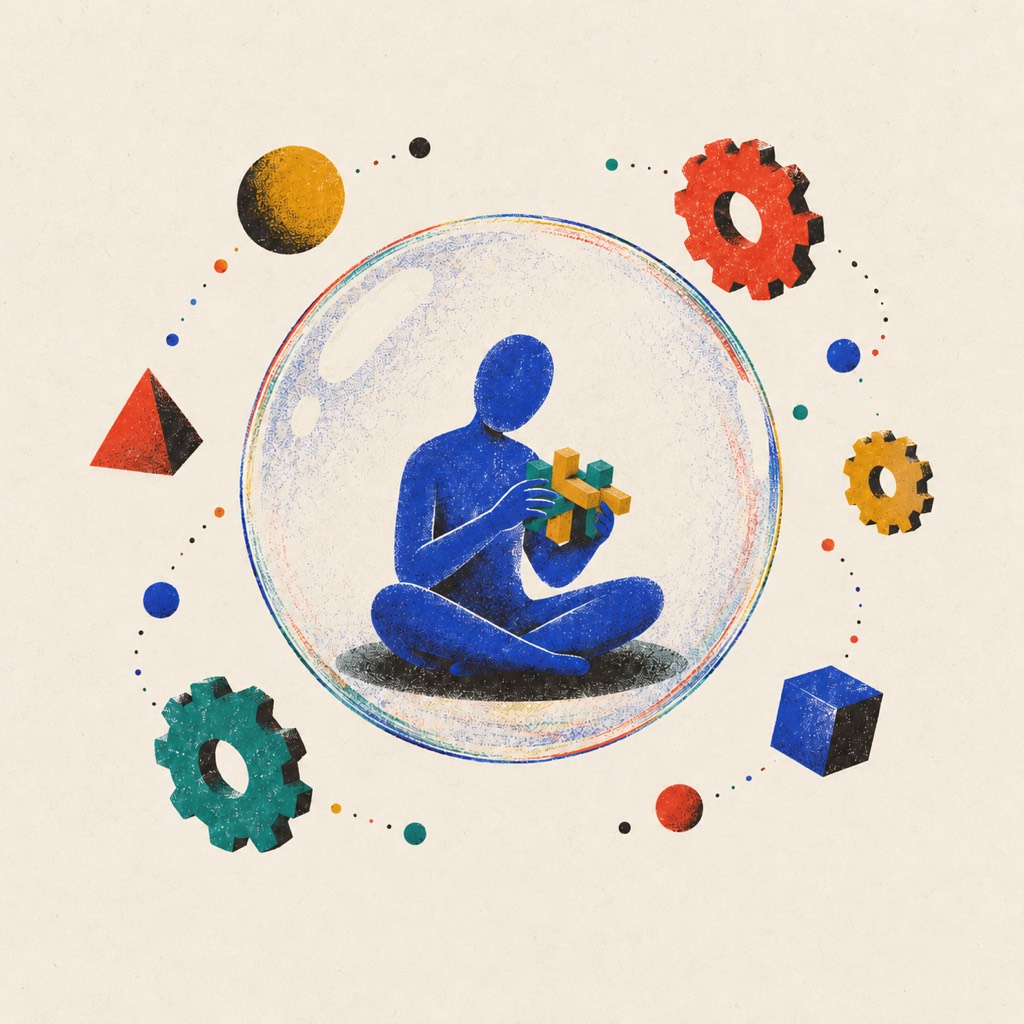
INTP is one of the 16 four-letter types in Jungian typology, short for Introversion, Intuition, Thinking and Perceiving. People with this preference usually love taking ideas apart to see how they fit, follow curiosity wherever it leads, and care more about getting an explanation right than about finishing it quickly. They tend to be relaxed, inventive and quietly playful.
What the letters in INTP mean
I (Introversion) points to a person who recharges through solitude and inner reflection. N (Intuition) means interest gravitates toward possibilities, theories and connections rather than concrete facts alone. T (Thinking) means the default way of deciding is to ask whether something is consistent and true.
P (Perceiving) signals a preference for keeping options open, gathering more information and adapting as things unfold. None of these letters is a box; an INTP can meet a deadline, enjoy a party or follow a schedule. They simply describe what tends to feel easiest. Myers-Briggs Type Indicator® and MBTI® are trademarks of The Myers-Briggs Company; Traitprint is not affiliated.
The INTP function stack
In the function-stack model, a later framework built on Jung's original writing, INTP runs Ti, Ne, Si, Fe. The dominant introverted thinking (Ti) builds an internal map of how things work and checks every new claim against it. The auxiliary extraverted intuition (Ne) feeds that map with fresh angles, analogies and what-if questions.
The tertiary introverted sensing (Si) stores reference points and familiar routines, which INTPs may rely on more than they admit. The inferior extraverted feeling (Fe) tracks group mood and social expectations. Because it is least developed, INTPs can care a great deal about harmony yet feel unsure how to show it.
INTP strengths and blind spots
INTPs often spot the flaw in an argument within seconds, find unusual connections between fields and explain hard concepts with fresh analogies. They are usually open to being wrong, provided the correction is logical.
The flip side is that a project can stay in the thinking stage for a long time. Perfecting the model may feel more satisfying than shipping it. Some INTPs also overlook practical upkeep, from paperwork to replying to messages, and can come across as detached when they are simply absorbed.
Stress often shows up as a swing toward the inferior function. An INTP who usually shrugs off social friction may suddenly feel that everyone is upset with them, or read a short reply as rejection. Recognizing that pattern as fatigue rather than truth, and stepping back to rest, usually restores perspective faster than analyzing it.
INTP in friendships and romance
Friendship for an INTP often looks like a shared rabbit hole: a game, a hobby or a debate that runs over years. They tend to be loyal, unfussy friends who accept people as they are and rarely keep score.
In romance, many INTPs value a partner who gives them room to think and enjoys talking about ideas. Expressing emotion may come in bursts or in practical help instead of words. No type pairing is a guaranteed success, despite what compatibility charts suggest; patience and clear communication matter far more than letters.
INTP at work and in careers
INTPs usually do their best work with freedom to explore, few pointless meetings and problems that are actually interesting. Rigid procedures and heavy social performance tend to wear them down.
Common directions include software development, mathematics, academic research, philosophy, game design, technical writing, analytics and engineering. That list is a pattern, not a prescription; INTPs also do well as carpenters, musicians or counselors when the work gives them something to figure out.
Common misconceptions about INTPs
Myth one: INTPs do not care about people. Their inferior Fe often makes them sensitive to conflict, even if they handle it awkwardly. Myth two: INTPs are lazy. Their energy is uneven rather than absent, and they can work intensely once a problem grips them.
Myth three: every INTP is a tech person. Curiosity about systems can point toward music theory, linguistics or history just as easily.
INTP, the Enneagram and the Big Five
Community surveys and type theory often link INTPs with Enneagram Type 5 (understanding and conserving energy), Type 9 (peace and low conflict) and sometimes Type 6 (questioning and security). These are loose tendencies, and an INTP can be any Enneagram type.
In Big Five terms, the type tends to sit high on openness, lower on extraversion and lower on conscientiousness, with agreeableness varying a lot. Type labels are a helpful lens rather than settled science, so treat these overlaps as starting points for reflection.
Growth tips for INTPs
Tertiary Si can become an ally: a few reliable routines, such as a fixed time for admin or a simple project log, free the mind for the interesting parts. Finishing one small thing each week builds momentum that pure exploration rarely does.
For inferior Fe, practice short, specific appreciation: telling someone exactly what they did well costs little and strengthens relationships. Before a hard conversation, decide what outcome you want for the other person, not just what is correct. Curious how your functions rank? Try the cognitive functions test.
- Sharp, precise reasoning
- Endless curiosity across fields
- Open to changing their mind
- Inventive, original solutions
- Easygoing and accepting
- Leaves projects unfinished
- Overthinks simple decisions
- Neglects routine tasks
- Unsure how to express care
- Can seem distant or distracted
FAQ
Is INTP a rare personality type?
Nobody knows precisely. There is no reliable population census of four-letter types, and published estimates differ by sample, country and test version. INTP is usually described as fairly uncommon, but the honest answer is that rarity rankings found online are rough guesses rather than settled numbers.
What is the difference between INTP and INTJ?
Both are introverted, intuitive thinkers, but their stacks are almost reversed in emphasis. INTPs lead with introverted thinking and explore with extraverted intuition, so they enjoy open questions. INTJs lead with introverted intuition and act through extraverted thinking, so they prefer converging on a plan. INTPs ask whether it makes sense; INTJs ask whether it will work.
Are INTPs always introverts?
They prefer introversion, which means solitude restores them, but that does not make them shy. Many INTPs are talkative and funny once a topic interests them. The I describes where energy tends to come from, not social skill, and every type uses both inner and outer worlds daily.
Can an INTP be organized?
Absolutely. Perceiving is a preference for flexibility, not an inability to plan. Many INTPs build personal systems, often clever and minimal, that keep their lives in order. The trick is making structure serve curiosity, for example by automating chores so more time is left for deep work.
Why do INTPs argue so much?
For many INTPs, debating is a way of thinking out loud and testing ideas, not a personal attack. Introverted thinking wants to see whether an argument holds up under pressure. Saying so upfront, and noticing when the other person needs support rather than analysis, keeps these conversations friendly.
INTJ is a personality type in Jungian typology that combines Introversion, Intuition, Thinking and Judging. People who identify with it tend to plan f…
ENTP is one of the 16 four-letter types described in Jungian typology, combining Extraversion, Intuition, Thinking and Perceiving. People who relate t…
INFP is one of the 16 four-letter types in Jungian-based typology, standing for Introversion, Intuition, Feeling and Perceiving. INFPs tend to be guid…
- INTJ Personality Type
- INTP Personality Type
- ENTJ Personality Type
- ENTP Personality Type
- INFJ Personality Type
- INFP Personality Type
- ENFJ Personality Type
- ENFP Personality Type
- ISTJ Personality Type
- ISFJ Personality Type
- ESTJ Personality Type
- ESFJ Personality Type
- ISTP Personality Type
- ISFP Personality Type
- ESTP Personality Type
- ESFP Personality Type
For self-reflection and entertainment only — not a clinical or diagnostic assessment.